The $115 Ceiling: Why Oil''s Rally Stalls Below $100 Despite Geopolitical


The $115 Ceiling: Why Oil's Rally Stalls Below $100 Despite Geopolitical Sparks
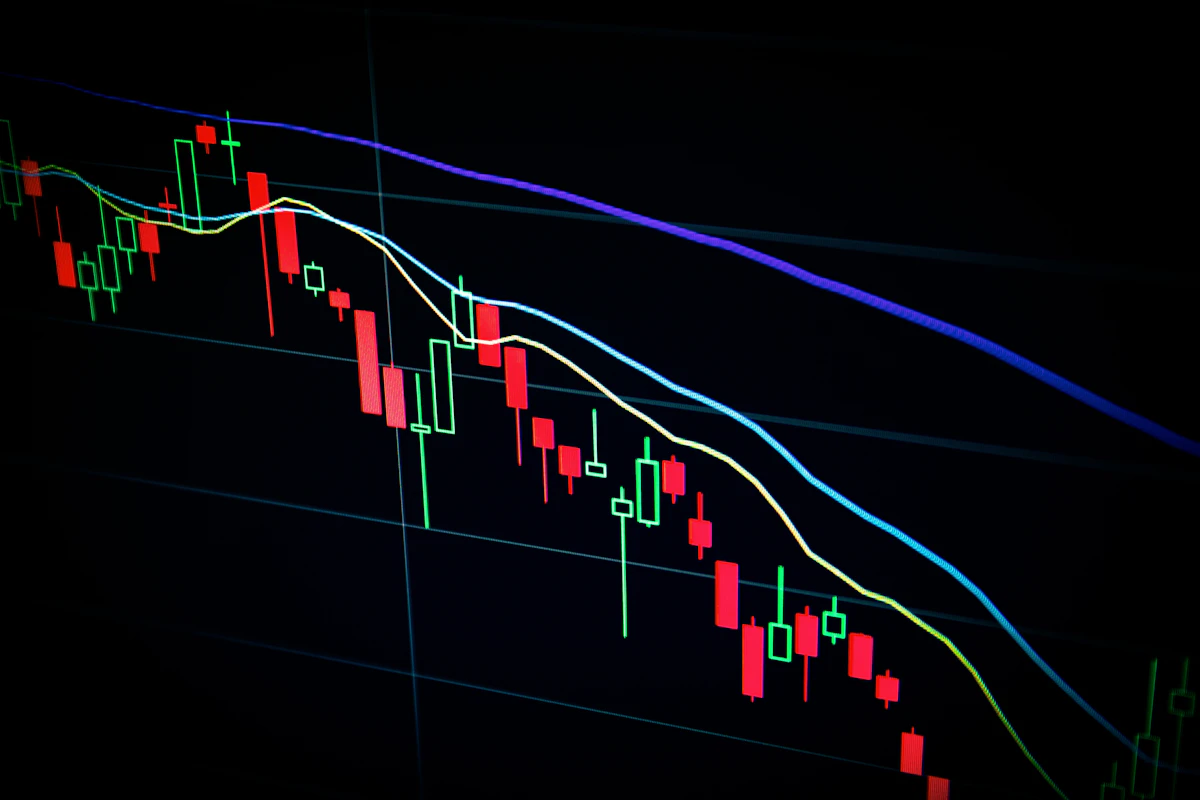 A dramatic, wide-angle shot of a modern trading floor with multiple glowing screens displaying volatile oil price charts and news headlines. In the foreground, a single, clear glass paperweight rests on a desk, containing a miniature, suspended barrel of oil and a fragile dove symbol, with a hairline crack visible in the glass.
Introduction: The Price That Wouldn't Break
Oil markets present a contemporary paradox. Prices have ticked higher amid tangible geopolitical risk, yet the benchmark Brent crude futures contract has persistently failed to breach the symbolic $100 per barrel threshold (Source 1: [Primary Data]). This price action occurs against a backdrop of instability in Middle East cease-fire negotiations, a factor historically capable of triggering significant volatility. Framing this market dilemma is a notable forecast from Goldman Sachs, projecting crude could reach $115 per barrel by year-end (Source 1: [Primary Data]). The current trading range is not a simple function of risk premium but a complex battle between transient fear and enduring structural market forces that have fundamentally altered how energy risk is priced.
 A composite chart showing Brent crude price (line graph) hovering below a bold $100 line, overlaid with translucent icons of conflict (explosions) and finance (bank towers).
The Geopolitical Spark vs. The Economic Firewall
The immediate catalyst for recent price support is concern over the stability of a Middle East cease-fire (Source 1: [Primary Data]). Such instability carries the latent potential to disrupt regional oil flows. However, the market's muted response relative to historical shock events—such as those following the invasion of Ukraine—indicates the activation of robust economic firewalls.
These firewalls consist of several coordinated and market-driven mechanisms. First, the demonstrated willingness of major consuming nations, particularly the United States, to deploy Strategic Petroleum Reserve (SPR) volumes has created a tangible buffer against short-term supply shocks. Second, the substantial spare production capacity held within the OPEC+ alliance, frequently referenced in official communications, acts as a psychological and physical supply backstop. Third, consistent supply growth from non-OPEC+ producers, including the United States, Guyana, and Brazil, provides a baseline of incremental barrels that dampens the upside from any single disruption.
The deep insight lies in the market's evolved risk calculus. The trading algorithms and human strategists that drive price discovery have internalized the lessons of recent volatility. Short-term disruptions are now discounted more rapidly, as the market prices in the high probability of a swift, coordinated response from these firewall mechanisms. The premium assigned now correlates more closely with the perceived probability of a prolonged, systemic state failure that would overwhelm these buffers, rather than a temporary outage.
 An infographic-style map of the Middle East highlighting key oil chokepoints, with layered transparent overlays showing shipping lanes and icons representing SPR storage sites in consuming nations.
Decoding Goldman's $115 Forecast: Signal or Stress Test?
Goldman Sachs' year-end forecast of $115 per barrel stands in stark contrast to the current market ceiling (Source 1: [Primary Data]). Its analytical value is not necessarily as a base-case prediction but as a framework for stress-testing the market's underlying assumptions. The forecast implicitly rests on specific conditions: a material and sustained supply disruption that bypasses the aforementioned firewalls, coupled with resilient demand that can withstand such a price spike.
Cross-validation against other institutional analyses reveals a wide dispersion of expert opinion. The International Energy Agency (IEA) has repeatedly pointed to well-supplied markets and rising inventories, while OPEC's monthly reports emphasize robust demand growth against a backdrop of cautious investment. This range of perspectives embeds the core uncertainty.
The primary function of a forecast like Goldman's may be to probe the limits of supply elasticity and demand destruction. It poses a critical question to the market: at what precise price point does demand destruction become severe, or alternative supply (including a full OPEC+ capacity release) become economically irresistible? The $115 figure, therefore, serves less as a destination and more as a boundary marker for a plausible tail-risk scenario, against which current positions and hedges are evaluated.
The Hidden Cap: Demand's New Fragility and the Energy Transition Shadow
The supply-side firewall is only one half of the price containment equation. A potent, if less visible, cap exists on the demand side. Global industrial activity remains sensitive to the persistent high-interest rate environment engineered by central banks to combat inflation, directly suppressing oil consumption growth. Concurrently, incremental efficiency gains across transportation and industry continue to erode the oil-intensity of economic output.
Perhaps more profound is the "energy transition shadow" effect. Long-term decarbonization policies and net-zero commitments by nations and corporations have altered the investment horizon for fossil fuels. This creates a psychological and financial cap on prices. Investors are increasingly reluctant to allocate long-term capital to oil projects, fearing stranded assets, while consumers and industries accelerate plans for electrification and fuel switching. The consequence is that even short-term price rallies are viewed as transient, inhibiting the speculative fervor that once drove prices far beyond fundamental equilibriums. The $100 barrier is as much a narrative as a technical level—a symbol of a perceived sunset industry's limited runway.
Conclusion: The New Anatomy of an Oil Price Shock
The failure of oil to sustain a rally above $100 per barrel despite clear geopolitical sparks signals a fundamental maturation of the global energy market. The pricing mechanism now incorporates a more sophisticated matrix of rapid-response buffers, demand-side fragility, and long-term existential threats to fossil fuel demand. Goldman Sachs' $115 forecast is a useful parameter in modeling extreme outcomes, but the prevailing market structure suggests such a peak would be short-lived without a concurrent, catastrophic failure of multiple stabilizing systems.
Neutral market prediction logic indicates that the trading range will continue to be bounded. The lower boundary is set by the production discipline of OPEC+ and the marginal cost of non-OPEC supply. The upper boundary, firmly demonstrated below $100, is established by the ready deployment of strategic stocks, the specter of demand destruction, and the overhang of spare production capacity. In this fragmented world, the era where fear alone could sustain triple-digit oil prices has concluded. The market now prices risk not as a temporary spike, but as a calculus of resilience against a known set of mitigants.
Editorial Note
This article is part of our Business & Trends coverage and is published as a fully rendered static page for fast loading, reliable indexing, and consistent archival access.
Written by
Marcus ThorneProfessional consultant specializing in global markets and corporate strategy.
View all articles